wecan01@wecan-machine.com
+86-18825990919
+86-07502632972

Stator assembly errors often begin with small variations in component position, insertion depth, riveting pressure, or operator handling. These deviations may cause loose connections, distorted laminations, dimensional inconsistency, abnormal vibration, or difficulties during later motor assembly. Electric motor manufacturing plants can reduce such problems by controlling positioning and pressing as one repeatable production process.
Before changing equipment, the factory should classify defects by process stage. Typical causes include incorrect part orientation, mixed component sizes, unstable fixtures, incomplete insertion, excessive pressure, insufficient riveting, and inconsistent manual loading.
A clear defect map helps separate incoming material problems from assembly problems. For example, an insertion fault caused by an out-of-tolerance component requires a different response from one caused by fixture wear or incorrect machine settings.
Manual pressing may depend on how the operator positions the stator and judges whether insertion is complete. This creates variation between workers and shifts. Mechanical stops improve control, but they may not detect missing parts or incorrectly loaded components.
A stator press insertion machine uses dedicated fixtures, controlled motion, and a fixed production cycle. Repeatable positioning ensures that each main and auxiliary stator enters the pressing station in the correct relationship. Pressure, tooling, and insertion depth can then be matched to the component design.
Pressing equipment should prevent hands from entering the active riveting station. Rotary indexing structures are useful because loading, positioning, pressing, and unloading can occur at separate stations.
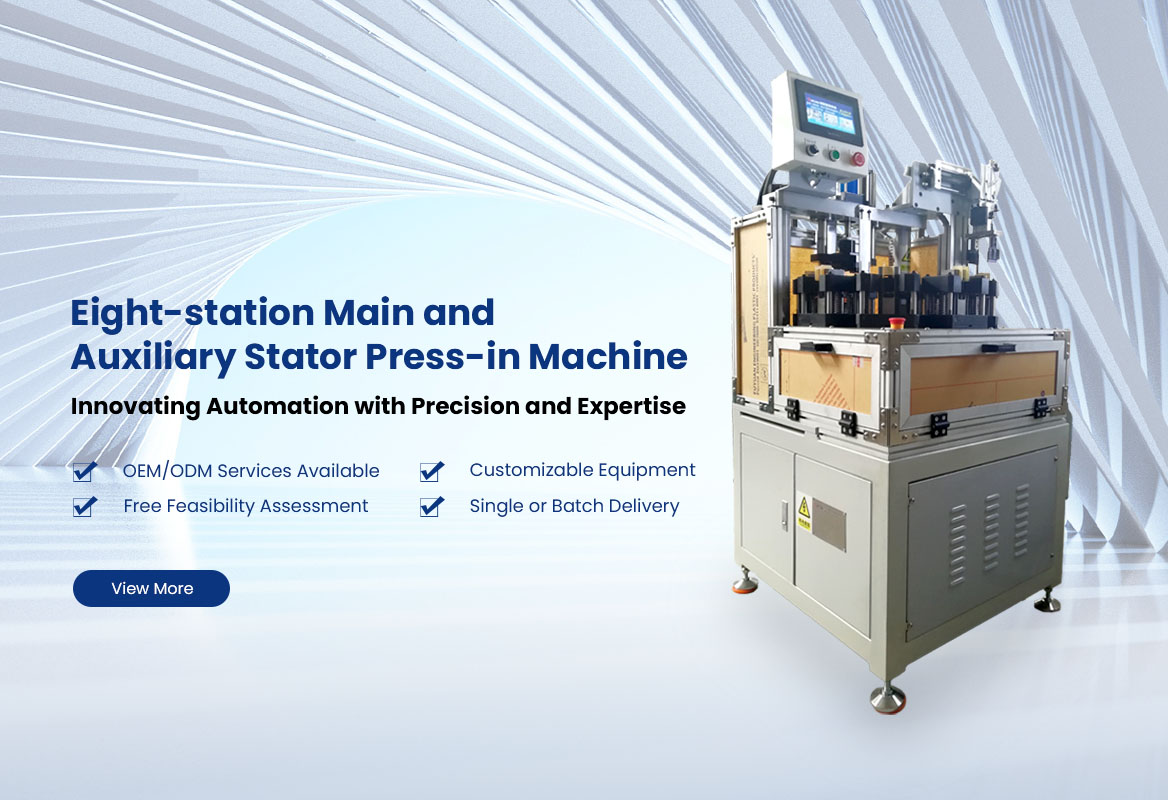
WECAN’s eight-station model uses a turntable configuration that separates the operator from the riveting area. It is designed for main and auxiliary stator riveting in shaded-pole and related motor production, with a published cycle of approximately 2.3 to 3 seconds per piece.
This station separation improves safety while creating a more orderly production rhythm. It also reduces hurried manual movements that can lead to reversed, tilted, or incompletely seated parts.
One effective way to reduce stator assembly errors is to check part presence before the pressure head moves. Sensors can confirm that the required material has reached the workstation. When no component is detected, the press cycle should stop automatically rather than producing an empty stroke or damaging the fixture.
Factories may also add checks for:
Component orientation
Fixture position
Insertion depth
Cycle completion
Abnormal machine timing
Tooling replacement intervals
These controls prevent common mistakes from continuing unnoticed through an entire batch.
Frequent model changes can introduce errors when fixtures, pressure heads, or parameters are not changed together. A documented recipe should connect each stator model with its tooling set, pressure setting, inspection criteria, and approved reference sample.
Worn fixtures must be replaced before clearance affects alignment. Operators should clean contact surfaces and confirm the first pieces after every changeover. The WECAN eight-station configuration supports model changes within about five minutes for specified 48, 58, and 60 series applications, helping production teams maintain flexibility without relying on lengthy manual adjustment.
Final inspection cannot prevent the cost already added to a defective stator. Process monitoring should therefore track first-pass yield, defect type, stoppage reason, tooling life, and faults by shift. A rising rate of tilted insertion may indicate fixture wear, while incomplete riveting may point to pressure instability or incorrect settings.
A properly configured stator press insertion machine creates consistent positioning, controlled pressing, automatic material sensing, and traceable operating conditions. Combined with disciplined changeovers and regular tooling checks, it helps motor factories reduce rework, stabilize cycle times, and prevent assembly variation from reaching downstream production.