wecan01@wecan-machine.com
+86-18825990919
+86-07502632972

Modern factories use automation not only to replace repetitive manual work, but also to build a more stable, measurable, and scalable production process. When output demand rises, labor availability changes, or product consistency becomes harder to control, an industrial automation machine can help manufacturers turn separate steps into a smoother production workflow.
According to the International Federation of Robotics, global robot density in manufacturing has continued to rise, and China reached 470 robots per 10,000 manufacturing employees in recent reporting, showing how quickly factories are moving toward automated production systems. This trend is not limited to large enterprises. Many small and medium factories are also upgrading key processes first, then expanding automation step by step.
An industrial automation machine is used to complete specific production actions through mechanical structure, electrical control, sensors, servo systems, pneumatic units, software logic, or robot integration. Its core value is not simply “faster production.” More importantly, it helps reduce unstable manual factors in operations such as feeding, drilling, pressing, inserting, assembling, cutting, testing, and material transfer.
For example, in hanger production, automation equipment can complete hook installation, drilling, assembly, and positioning with less dependence on worker skill. In motor manufacturing, machines such as stator press machines, servo presses, rotor processing equipment, bearing insertion equipment, and final assembly systems help improve process repeatability. WECAN’s product categories include Home And Clothes Hanger Equipment, Electric Motor Equipment, EPE Processing Equipment, and CNC Equipment, supporting both standalone machines and integrated production solutions.
The most common use is to improve production efficiency. When a process depends heavily on manual operation, output usually changes with worker experience, fatigue, shift arrangement, and training time. Automation allows the machine to follow fixed parameters, making production rhythm easier to manage.
Another key use is quality consistency. For parts that require stable position, pressure, drilling depth, pressing force, or assembly direction, automated control helps reduce batch variation. This is especially important for products that need repeatable dimensions or stable assembly strength.
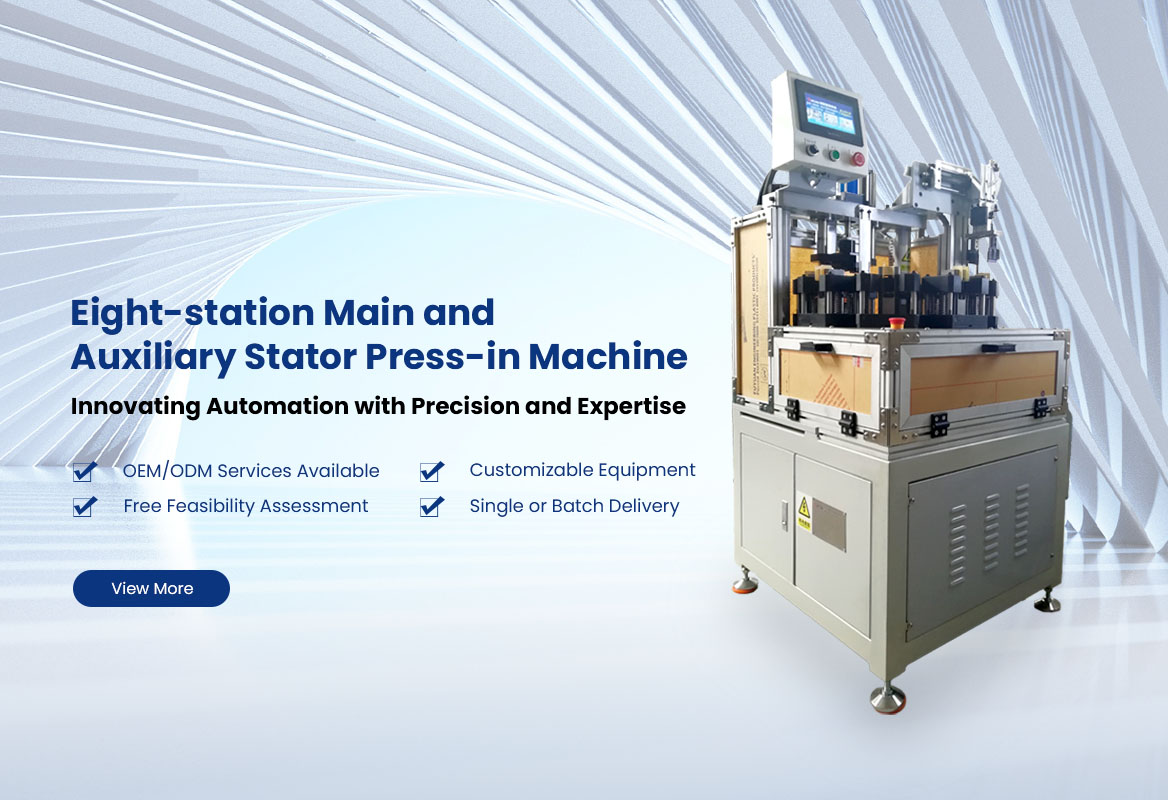
Automation also improves workplace safety. WECAN’s electric motor equipment includes stator press and insertion machines designed with multi-station structures, helping separate operators from direct pressing areas and reduce manual exposure during repetitive industrial operations.
Different industries use automation in different ways, but the logic is similar: identify unstable, repetitive, labor-intensive, or precision-sensitive processes, then convert them into controlled mechanical actions.
| Application Area | Typical Automation Use | Practical Value |
|---|---|---|
| Hanger manufacturing | Drilling, hook installation, assembly, positioning | Higher output and less reliance on skilled manual work |
| Motor production | Stator pressing, insertion, servo pressing, assembly | Better consistency in precision parts production |
| EPE processing | Cutting, forming, handling, packaging support | Cleaner workflow and improved material utilization |
| CNC processing | Milling, drilling, cutting, shaping | More accurate machining and lower manual positioning error |
| Integrated production lines | Feeding, transfer, assembly, inspection connection | Stronger process continuity and easier capacity planning |
For factories producing large volumes, automation can help stabilize delivery schedules. For factories producing multiple specifications, flexible automation design can support product changeovers through tooling, fixtures, parameter settings, or modular structures.
Factories invest in production automation equipment because production pressure often comes from several directions at the same time. Labor cost may increase, skilled workers may be harder to retain, product standards may become stricter, and delivery windows may become shorter. When these problems appear together, improving one machine or one workstation may not be enough.
A well-designed automated system can support three improvements at once: higher output, lower process fluctuation, and more visible production control. WECAN focuses on automation equipment, intelligent mechanical equipment, robot integrated applications, industrial software control systems, hardware accessories, and molds, which allows the company to approach automation from both mechanical design and control system logic.
A smart factory system is not only a group of machines placed together. It requires machines to communicate with the production target, process rhythm, quality requirements, and maintenance plan. Automation equipment is the hardware foundation of this system.
In practical manufacturing, a smart factory system may include automatic feeding, programmable control, sensor detection, servo positioning, alarm feedback, data recording, and line balancing. These functions help managers understand whether the line is running normally, where bottlenecks appear, and which process needs adjustment.
For a factory planning long-term upgrades, the better approach is often not to automate everything at once. A more practical path is to start with high-frequency processes, quality-risk processes, or labor-heavy steps. After the first stage becomes stable, more machines can be connected into a complete workflow.
Before purchasing automation equipment, a factory should not only ask about machine speed. A machine that runs fast but does not match the product structure, material tolerance, operator skill level, or maintenance ability may create new problems.
Several points should be checked carefully:
Product specification range
The equipment should match current product sizes while leaving room for reasonable future changes.
Production capacity target
The required output per hour, per shift, and per month should be clear before machine design starts.
Process stability
Key actions such as pressing, drilling, inserting, positioning, cutting, or assembling should be analyzed to identify where automation can reduce defects.
Maintenance structure
Good automation design should consider access for adjustment, wearing parts replacement, cleaning, and troubleshooting.
Upgrade possibility
A machine should not block future expansion. For growing factories, connection to feeding systems, conveyors, inspection units, or additional stations may become important later.
As an industrial automation machine supplier, WECAN supports factories that need practical automation rather than generic equipment. The company’s experience covers different equipment categories, including hanger machinery, motor production equipment, EPE processing equipment, and CNC equipment. This helps WECAN understand how mechanical structure, fixture design, process rhythm, and control systems work together in real production.
WECAN also emphasizes customized design. For example, its automatic wooden hanger assembly machine is designed to complete hook, hanger, and round rod assembly with minimal manual intervention, and the listed equipment efficiency reaches 15 pieces per minute. This kind of machine design shows how automation can solve a specific production bottleneck instead of simply adding machinery to a workshop.
Not every factory needs a fully automatic line at the beginning. Some factories benefit more from a semi-automatic machine that improves one critical process. Others need a complete line that connects multiple workstations into continuous production. The right choice depends on output demand, product standardization, budget, plant layout, and operator availability.
A practical automation plan should answer these questions clearly:
Which process causes the most delay?
Which defect is most expensive to correct?
Which manual action is hardest to train?
Which step limits monthly capacity?
Which machine can bring measurable improvement first?
WECAN’s role as an automation equipment manufacturing factory is to help connect these questions with machine structure, control design, tooling configuration, and future line expansion. The goal is not only to sell equipment, but to help factories build a production system that can run steadily, adapt to order changes, and support long-term competitiveness.
Industrial automation machines are used to improve efficiency, stabilize quality, reduce labor dependence, strengthen safety, and connect production steps into a more reliable manufacturing system. For factories facing rising order complexity and stricter delivery expectations, automation has become a practical production strategy rather than an optional upgrade.
WECAN provides automation equipment and integrated machine solutions for manufacturers that need reliable production support, customized equipment design, and scalable factory upgrading. With the right machine configuration, automation can become a long-term foundation for stronger output, better consistency, and more controlled production growth.