wecan01@wecan-machine.com
+86-18825990919
+86-07502632972

Continuous industrial operation is not only about running a machine longer. It is about stable output, controlled variation, predictable maintenance, and safe uptime across days and shifts. Siemens’ 2024 downtime research highlights why this matters: a large automotive plant can lose about $2.3 million per hour of unplanned downtime, and large plants still lose dozens of hours per month on average.
From WECAN’s perspective as an automation equipment manufacturer, the equipment that truly supports continuous operation shares one thing: it is designed as a system, not a standalone machine. That means rigid mechanical structure, synchronized motion control, reliable electrical architecture, and a control strategy that keeps production repeatable while reducing interruption risk.
If the process requires repeated loading, positioning, and transfer, continuous operation depends on material flow continuity. WECAN’s automation approach often combines feeding, positioning, processing, and discharge into a linked cycle so output is not limited by manual handoffs. In EPE processing, WECAN notes that automated lines can maintain consistent speed over long runs and report throughput gains above 40% compared with manual systems, largely because motion and process steps stay synchronized.
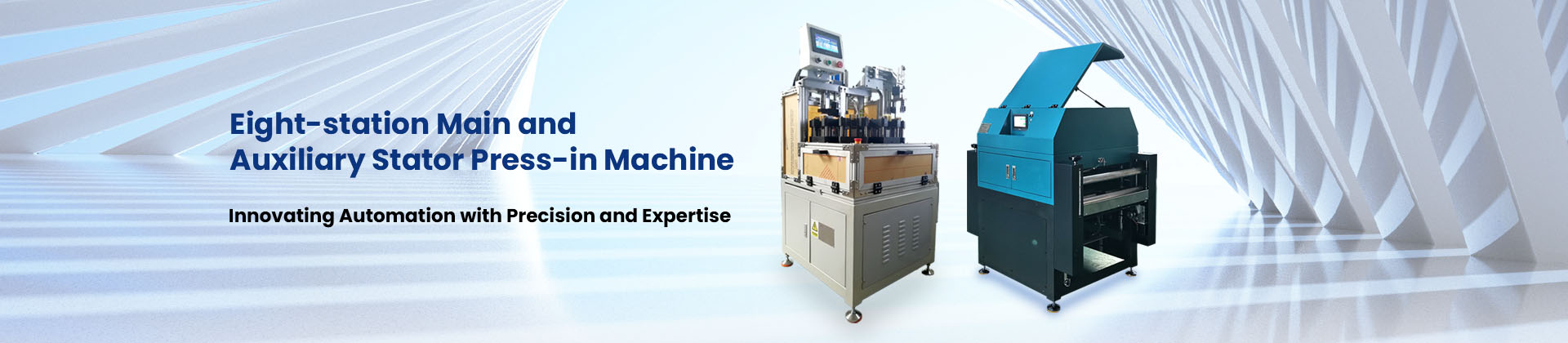
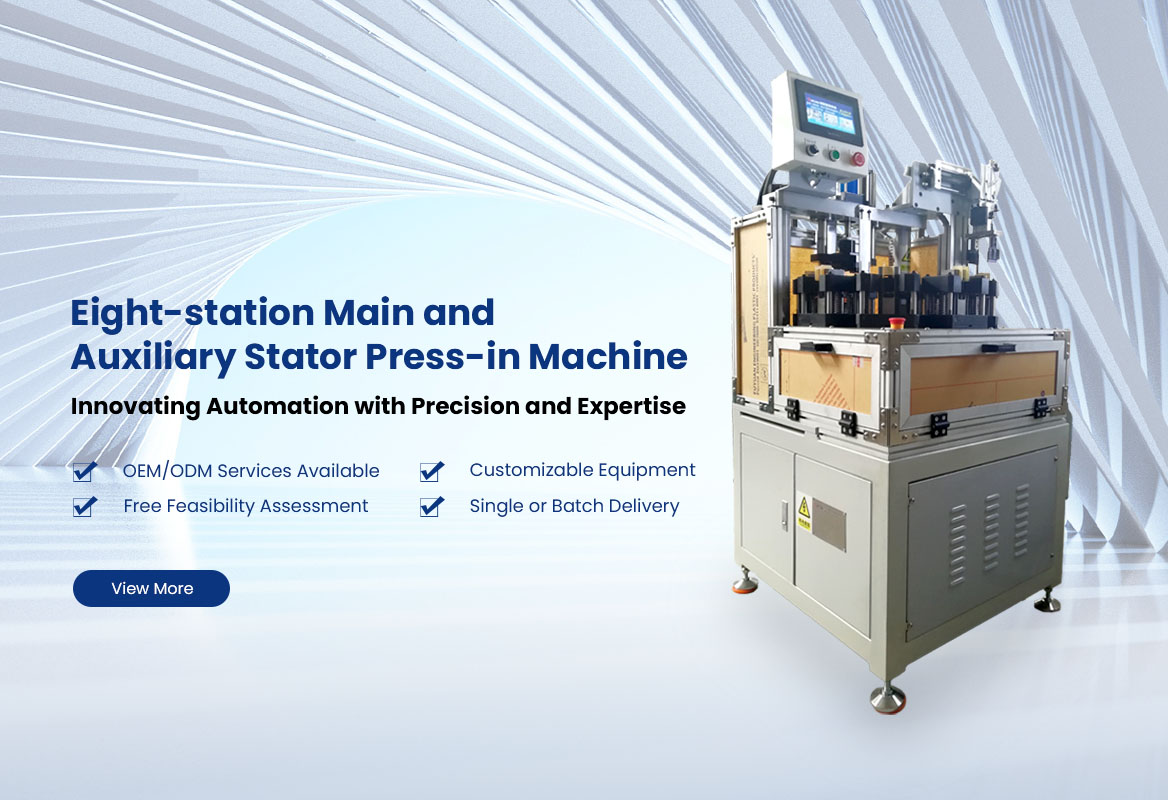
When a process can be divided into repeatable sub-steps, multi-station layouts reduce stop-start behavior and stabilize takt time. For example, the WECAN product range includes multi-station concepts such as an eight-station stator press and insertion direction, which aligns with continuous production logic by keeping work-in-process moving in controlled increments.
For continuous operation, motion control is where quality and uptime meet. Servo-driven systems help maintain repeatability under long duty cycles because speed, position, and force can be controlled and monitored more precisely. WECAN’s EPE punching and cutting configuration states selectable thickness handling from 15 to 110 mm, with servo press action and automated feeding, and indicates one operator can supervise multiple units in a configured line.
Continuous operation fails quickly when upstream supply is inconsistent. Pre-processing machines that produce stable blanks or intermediates are often the “silent” enablers of uninterrupted downstream automation. WECAN’s wood hanger slitting machine description emphasizes automated production and an output claim of 20,000 pieces per day, plus an indicative cycle efficiency around 1.5 seconds per piece in the specification table.
Continuous operation amplifies minor mechanical weaknesses into recurring stoppages. Look for rigid frames, stable guiding, and drive layouts that minimize vibration and misalignment drift. In WECAN’s own explanation of automated EPE processing, servo-driven mechanisms are highlighted as a way to keep cutting and laminating stable over long production runs.
Continuous operation benefits from controls that standardize outcomes across shifts. PLC-based sequencing, recipe management, and sensor feedback reduce human variability. WECAN describes PLC-controlled synchronization in its production-line discussion and also highlights data collection and monitoring logic in automated equipment narratives.
The best continuous systems detect drift early, not after scrap piles up. WECAN’s EPE automation article describes real-time monitoring and parameter adjustment and even references tight dimensional control capability such as tolerance within ±0.2 mm in its discussion of automated consistency. Whether your process is foam, wood components, or motor manufacturing steps, the principle is the same: quality signals should be embedded into the cycle.
Continuous operation is sustained by short, predictable maintenance windows. That means accessible lubrication points, quick-change tooling, modular subassemblies, and clear fault isolation logic. This is also where condition monitoring becomes valuable. Siemens’ downtime report associates broader adoption of condition monitoring and predictive practices with lower downtime exposure and quantifies potential benefits at scale, reinforcing why maintenance strategy is part of equipment selection.
For continuous operation, safety is not only compliance. It prevents “nuisance stops” while still protecting people and assets. Two commonly referenced foundations are:
ISO 13849-1 for safety-related parts of control systems methodology and design guidance
IEC 60204-1 for general requirements around electrical equipment of machines
A well-engineered system balances protective functions with stable production behavior, especially during fault recovery.
| Equipment category | What enables continuous operation | Example operational indicators |
|---|---|---|
| Automated EPE processing lines | Servo-driven synchronized motion, reduced manual intervention, monitored parameters | Throughput improvement reported above 40%, utilization discussed up to 95% in automation context |
| Servo punching and cutting systems | Automated loading, consistent force and position control, scalable line integration | Thickness range 15–110 mm, cycle time range 4–5 seconds per piece in stated specs |
| Wood component pre-processing | Stable upstream feeding and repeatable cycle timing | Output claim 20,000 pieces per day, efficiency around 1.5 seconds per piece in stated specs |
| Multi-station motor manufacturing equipment | Balanced station takt, controlled transfer, reduced stop-start | Multi-station architecture aligns with long-run takt stability |
Data and examples reflect WECAN’s published descriptions and specifications.
WECAN’s positioning covers automation equipment, intelligent mechanical equipment, robot integrated applications, and industrial control systems, which matters because continuous operation is achieved through the integration of mechanics and controls, not by isolated components.
For projects that require scalable deployment, WECAN’s category coverage across hanger equipment, motor equipment, EPE processing, and CNC-related automation supports an OEM/ODM-ready approach where process modules can be configured around your throughput target, footprint, and automation depth.
Automation equipment that supports continuous industrial operation is defined by four outcomes: stable flow, repeatable control, maintainable design, and safety-aligned architecture. When evaluating solutions, focus less on single performance claims and more on whether the machine and line are engineered to run predictably over time. WECAN’s product strategy and published specifications emphasize exactly these continuous-operation fundamentals across multiple industrial categories.